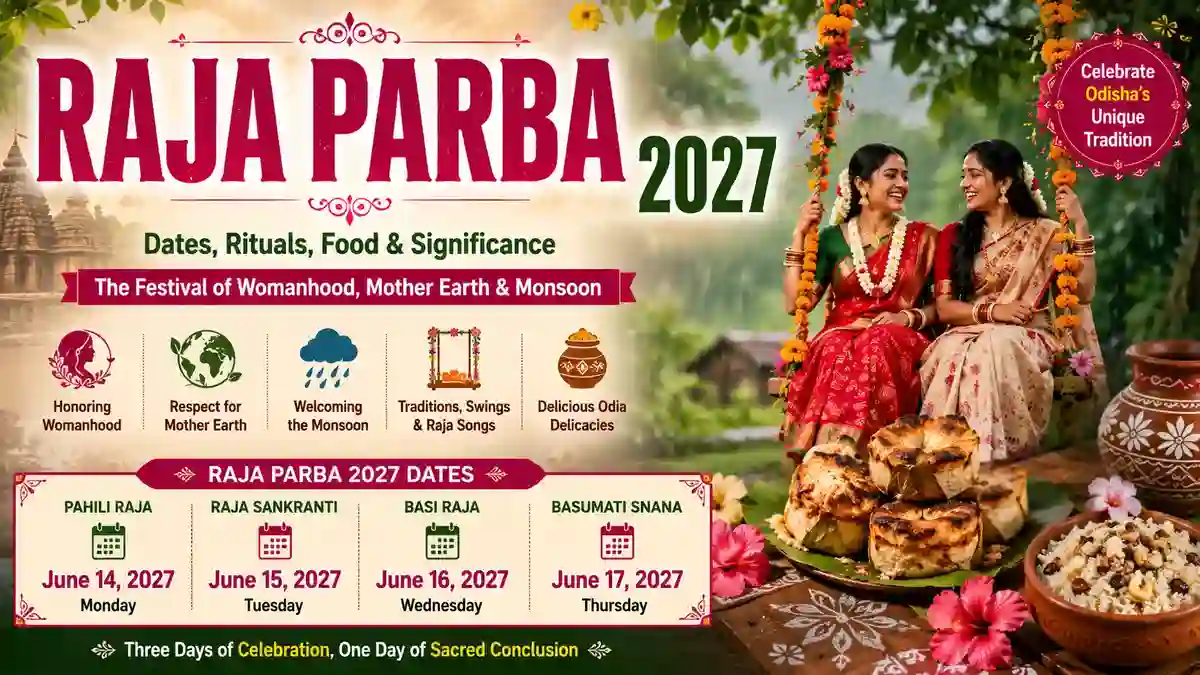
Raja Parba 2027 is one of the most celebrated traditional festivals of Odisha, honoring womanhood, Mother Earth, fertility and the arrival of the monsoon. Also known as Raja Festival, Rajo Parba, Raja Sankranti or Mithuna Sankranti, this unique festival is deeply connected with Odisha’s agrarian traditions and cultural identity.
In 2027, Raja Parba will be observed from June 14 to June 16, with Basumati Snana on June 17. The main Raja Sankranti falls on Tuesday, June 15, 2027, when the Sun enters Mithuna (Gemini).
During these days, agricultural activities traditionally stop, women and girls take a break from household work, swings are decorated, traditional songs are sung, and special Odia delicacies such as Poda Pitha are prepared. The festival beautifully connects the rhythms of women’s lives with the natural cycle of the Earth.
Raja Parba 2027 Dates
Here are the important dates for Raja Parba Festival 2027 in Odisha:
| Raja Parba Celebration | Date | Day |
|---|---|---|
| Pahili Raja | June 14, 2027 | Monday |
| Raja Sankranti / Mithuna Sankranti | June 15, 2027 | Tuesday |
| Basi Raja | June 16, 2027 | Wednesday |
| Basumati Snana | June 17, 2027 | Thursday |
The three main days are Pahili Raja, Raja Sankranti and Basi Raja. Basumati Snana is observed on the following day and traditionally marks the ceremonial conclusion of the festival.
When is Raja Parba in 2027?
Raja Parba 2027 begins on Monday, June 14, and the main Raja Sankranti is on Tuesday, June 15. The three-day celebration continues through Wednesday, June 16, followed by Basumati Snana on Thursday, June 17.
The dates are linked with Mithuna Sankranti, the solar transition into Mithuna Rashi (Gemini). In 2027, this transition occurs on June 15.
What is Raja Parba?
Raja Parba is a traditional festival of Odisha that celebrates womanhood, fertility and the fertility of the Earth. The word Raja is commonly associated with Rajaswala, referring to menstruation.
According to traditional belief, during Raja Parba, Bhudevi, or Mother Earth, is regarded as undergoing her menstrual cycle. Just as women are given rest during menstruation, the Earth is also given a period of rest.
For this reason, agricultural work is traditionally suspended during the festival. Ploughing, digging and other activities that disturb the soil are avoided.
This makes Raja Parba more than a cultural celebration. It reflects an old Odia understanding of the relationship between women, agriculture, rain, soil and fertility.
Why is Raja Parba Celebrated?
Raja Parba is celebrated to honor the natural fertility of the Earth and the strength of womanhood.
The festival traditionally represents:
- Womanhood and femininity
- Fertility and the power of creation
- Respect for Mother Earth
- The arrival of the monsoon
- The beginning of the agricultural season
- Rest from household and agricultural work
- Odia food, music and folk traditions
- Family and community togetherness
One of the most distinctive aspects of Raja is that women and girls are encouraged to enjoy the festival rather than spend the days doing routine household chores.
They wear new clothes, decorate their feet with Alata, enjoy swings, sing Raja songs, play games and visit relatives and friends.
Four Important Days of Raja Parba
Although Raja Parba is generally described as a three-day festival, the celebration is associated with four important days when the concluding Basumati Snana is included.
1. Pahili Raja – June 14, 2027
Pahili Raja is the first day of Raja Parba and falls on Monday, June 14, 2027.
It is traditionally a day of preparation and celebration. Women and girls put aside many routine household activities and dress in new clothes.
Homes become lively with the preparation of traditional food, while swings are decorated for the festival.
The atmosphere is particularly joyful for young girls, who gather to enjoy swings, games, songs and traditional treats.
Pahili Raja sets the mood for the main Raja celebrations that follow.
2. Raja Sankranti – June 15, 2027
Raja Sankranti, also called Mithuna Sankranti, is the central day of the festival and falls on Tuesday, June 15, 2027.
It marks the Sun’s transition into Mithuna Rashi. This solar event is closely connected with the traditional timing of Raja Parba in Odisha.
Women and girls celebrate the day wearing new clothes, enjoying swings and eating traditional Odia dishes.
The day is also significant because agricultural activities remain suspended as the Earth is traditionally believed to be resting.
3. Basi Raja – June 16, 2027
Basi Raja, sometimes called Bhudaaha or Sesha Raja, is the third day of Raja Parba.
The festive mood continues with traditional food, games, swings, songs and visits to family members.
For many families, Basi Raja is a relaxed day spent enjoying the remaining celebrations with friends and relatives.
4. Basumati Snana – June 17, 2027
Basumati Snana is observed on the day after the three main Raja days.
The ritual is associated with the ceremonial bathing of Bhudevi, Mother Earth. A grinding stone is traditionally treated as a symbolic representation of the Earth and is decorated with turmeric, vermilion, flowers and other auspicious items.
Water is offered to the symbolic Earth, marking the completion of the period of rest.
After this ritual, agricultural activities can traditionally resume.
Raja Doli: The Famous Swings of Raja Parba
One of the most recognizable traditions of Raja Parba is the Raja Doli, or traditional swing.
Swings are tied to strong tree branches, and women and girls spend time swinging while singing traditional Raja songs.
In villages and towns across Odisha, decorated swings become a major attraction during the festival.
The swing is more than entertainment. It has become one of the strongest cultural symbols associated with Raja Parba and is closely connected with the happiness and freedom traditionally given to women and girls during the festival.
Traditional Raja Parba Food
Food is an important part of Raja Parba. Families prepare a variety of traditional Odia dishes, particularly different kinds of Pitha.
Poda Pitha
Poda Pitha is perhaps the most famous food associated with Raja Parba.
This traditional Odia rice cake is prepared from ingredients such as fermented rice batter, coconut, jaggery and spices. It is traditionally baked slowly, giving it a distinctive roasted flavor and texture.
Other Raja Festival Foods
Depending on the family and region, Raja celebrations may include:
- Poda Pitha
- Manda Pitha
- Chakuli Pitha
- Arisa Pitha
- Kakara Pitha
- Different coconut and jaggery-based sweets
- Seasonal fruits
- Traditional Odia vegetarian dishes
Food is often shared with relatives and visitors, making Raja a festival of both culture and hospitality.
Raja Parba and Women
Raja Parba has a particularly important place in Odisha’s cultural traditions because it places women and girls at the center of the celebration.
During the festival, women traditionally receive a break from many household responsibilities.
They may:
- Wear new clothes
- Apply Alata to their feet
- Enjoy traditional swings
- Sing Raja Geeta
- Play cards and other indoor games
- Visit friends and relatives
- Eat special festival food
- Spend time relaxing with family and friends
This tradition creates a festive environment in which leisure and celebration become an important part of the occasion.
Raja Geeta and Folk Songs
Music is another important element of Raja Parba.
Traditional Raja Geeta are folk songs associated with the festival. Young women and girls sing these songs while enjoying the swings and spending time together.
The songs and oral traditions help preserve Odisha’s regional culture and pass it from one generation to another.
Traditional Games During Raja
Raja Parba is also associated with recreation and games.
Women and girls may enjoy:
- Swings
- Cards
- Ludo
- Indoor games
- Singing
- Informal competitions
- Visiting relatives and friends
The festival is intentionally associated with relaxation rather than strenuous work.
Alata and New Clothes During Raja
Wearing new clothes is a popular Raja tradition, especially among girls.
Many women and girls also apply Alata, a traditional red dye, to their feet. The bright red color adds to the festive appearance of traditional Odia clothing.
Saris, colorful dresses, jewelry and decorated feet create a distinctive visual character during Raja Parba.
Raja Parba and Agriculture
Raja Parba has strong roots in the agricultural traditions of Odisha.
For an agrarian society, the monsoon is extremely important. Rain determines the beginning and success of many farming activities.
Raja arrives around the beginning of the monsoon season and symbolically gives the Earth a period of rest before agricultural work resumes.
During the festival, traditional practices discourage activities such as:
- Ploughing
- Digging
- Tilling
- Other work that disturbs the soil
This practice reflects a cultural relationship between humans and the land.
Cultural Significance of Raja Parba
The importance of Raja Parba extends beyond its colorful celebrations.
The festival represents a traditional worldview in which human fertility and Earth’s fertility are connected.
The Earth is not viewed simply as agricultural land. She is respected as a living and nurturing force capable of producing food and sustaining life.
By giving the Earth a period of rest, Raja Parba expresses gratitude toward nature while celebrating the role of women in society.
This makes Raja one of the most distinctive festivals of Odisha.
Raja Parba in Odisha: How It Is Celebrated
Raja Parba is celebrated across Odisha, from villages to cities.
In rural areas, the traditional connection with agriculture, trees and community gatherings can be particularly visible. In cities, families continue the traditions through food, new clothes, swings, games and social gatherings.
Homes may be decorated, special food is prepared, and family members come together.
The exact way Raja is celebrated can differ from one family or region to another, but the central themes remain similar: rest, womanhood, nature, food and community.
Raja Parba vs Raja Sankranti
These terms are sometimes used interchangeably, but they can refer to slightly different parts of the celebration.
Raja Parba generally refers to the broader festival covering the three main days.
Raja Sankranti refers specifically to the central day associated with Mithuna Sankranti.
For 2027:
- Pahili Raja: June 14
- Raja Sankranti: June 15
- Basi Raja: June 16
- Basumati Snana: June 17
This distinction is useful when searching for Raja Parba 2027 date, Raja Sankranti 2027 date or Pahili Raja 2027.
Raja Parba 2027 Odia Calendar at a Glance
| Event | Date | Day |
|---|---|---|
| Pahili Raja | June 14, 2027 | Monday |
| Raja Sankranti | June 15, 2027 | Tuesday |
| Mithuna Sankranti | June 15, 2027 | Tuesday |
| Basi Raja | June 16, 2027 | Wednesday |
| Basumati Snana | June 17, 2027 | Thursday |
The main Raja Sankranti date is June 15, 2027, while Pahili Raja begins the celebrations on June 14.
Why Raja Parba Is Special to Odisha
Raja Parba is deeply woven into the cultural identity of Odisha.
Unlike many festivals centered primarily around a deity, Raja places considerable emphasis on women, nature and the Earth.
The festival combines:
- Ancient agricultural traditions
- Respect for Mother Earth
- Celebration of womanhood
- Traditional Odia cuisine
- Folk music
- Swings
- New clothes
- Family gatherings
- Community celebrations
This combination makes Raja Parba a unique cultural festival and one of the most recognizable festivals of Odisha according to Odia Calendar.
Frequently Asked Questions About Raja Parba 2027
Raja Parba 2027 begins on Monday, June 14, 2027, with Pahili Raja. Raja Sankranti is on Tuesday, June 15, and Basi Raja is on Wednesday, June 16.
Pahili Raja will be celebrated on Monday, June 14, 2027.
Raja Sankranti will fall on Tuesday, June 15, 2027. It is associated with Mithuna Sankranti, when the Sun enters Mithuna Rashi.
Basi Raja will be observed on Wednesday, June 16, 2027, the third day of the Raja Parba celebration.
Basumati Snana is expected on Thursday, June 17, 2027, following the three main days of Raja Parba.
The tradition is connected with the belief that Mother Earth is menstruating and therefore needs rest. Women are similarly encouraged to take a break from household work during the festival.
Poda Pitha is one of the most famous Raja Parba foods. Other traditional Pithas such as Manda Pitha, Chakuli Pitha and Kakara Pitha may also be prepared.
Raja Doli is the traditional swing associated with Raja Parba. Swings are often tied to tree branches and decorated, and women and girls enjoy them while singing traditional Raja songs.